Thursday, December 29, 2011

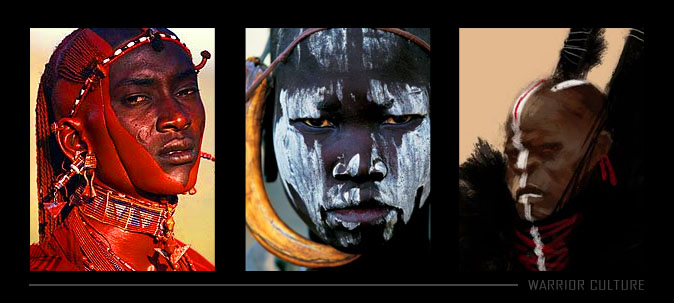
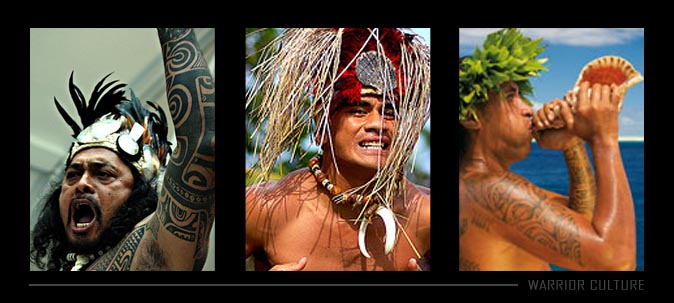
WARRIOR CULTURE

This is a collection of proud faces from proud cultures. 
If you look really closely... you can see the pride in their eyes... history is not about time or places... it's all about people


Monday, December 19, 2011

KAHUNGUNU


Porou-Ariki and Tahu-Matua
INTRO: To fully appreciate the southern boundaries of Ngai Tamanuhiri one must have some knowledge of the wider history and the oral traditions of Turanga-tangata-rite. It also requires a basic understanding of the whakapapa-lines that underpin the whanau alliances in the area. Tahu Potiki’s arrival at the Turanganui river heralded a new era in iwi development. Tahu’s crossing saw a simple fishing rock ‘Te Toka-a-Taiau’ suddenly symbolise a ‘line in the sand’ between the tuakana and the teina.. To the north Porou-Ariki and his whanau claim absolute-mana with a very catchy… “mai Potikirua tae noa ki Te Toka-a-Taiau”. Porou and Tahu were born and raised at Whangara. After the trouble between these brothers (over Hamo) and the demise of Porou-Ariki himself, Tahu settled at Turanganui with his new wife (and brothers widow) Hamoterangi. However the people of Turanganui are linked to both brothers by whakapapa...

KAHUNGUNU
Ira-a-Tahu is another son of Tahu who settles around Turanga. He has Iraroa, who marries Tokerau-Wahine (granddaughter of Porou). Iraroa and Tokerau-Wahine had a daughter called Iwipupu who marries Tamatea-Pokaiwhenua of Takitimu. Together they have Kahungunu, who thus inherits Tahu whakapapa. Obviously that whakapapa passes to his uri like Kahukuranui, Tauhei, Tamatea-Koata, Mahaki, Rakaihikuroa, Rakaipaaka, Hinemanuhiri, Tarakiuta and Tarakitai. All make meaningful contributions to the history of Turanga. If indeed connections to an ancestor are any measure, then let us be measured by Apirana Ngata who makes the following observation in his Rauru Lectures…
Ngati Porou can claim descent from seven out of ten of Kahungunu's children, while the Ngai Tamanuhiri, Rongowhakaata and Te Aitanga a Mahaki of Gisborne are able, so I am informed, to claim from all of them. Yet the tribal name Ngati Kahungunu has as among the East Coast tribes restricted application. It was established in the Wairoa district through Rakaipaaka and Hinemanuhiri, the children of Kahungunu's eldest son Kahukuranui, by his second wife Tuteihonga. In Hawkes Bay the name followed in the wake of Rakaihikuroa and his sons and grandson. Thence by sundry migrations and intermarriages the name extended until it superseded other tribal appellations in the territory south of Hawkes Bay.
Whakapapa to Kahungunu from Paikea-Ariki


Monday, December 12, 2011

TE ARA MOKOMOKO

 Despite his small size and cute appearance, gecko terrified early Maori settlers. Reptiles are the children of Punga, a son of Tangaroa. Punga is known as the father of ugly creatures like stingrays, reptiles and insects. Punga had two sons called Ika-tere and Tu-tewehiwehi. When Tawhirimatea (god of the winds) attacked Tangaroa (god of the sea) it caused chaos amongst the sea god’s many descendants. Ika-tere fled below the waves and became an ancestor of the fish while Tu-tewehiwehi hid on shore becoming the ancestor of reptiles.
Mokomoko one of the children of Mokohikuwaru
All lizards are the children of Moko-hiku-waru, a giant reptile god that lived in the Taranaki area. Moko-hiku-waru and another giant reptile called Tu-tangata-kino are said to be guardians of the house of Miru, ruler of the underworld. Both were very dangerous creatures. Special tohunga could employ these giant reptiles to attack their enemies or guard special objects or places. It was common to employ the descendants of Moko-hiku-waru, like the gecko, to guard hidden treasures and family heirlooms.
Another reptile god called Te Ngangara-huarau lived near Rangitoto (D’Urville Island). One day the monster kidnapped a woman from a nearby village. He took the woman back to his cave where he made her his wife. The woman managed to escape and returned to her village. When she told her brothers about her ordeal they decided to capture and kill the beast.
The brothers built a strong house to hold the giant. They lured it into their village using their sister as bait. When they finally got him inside they slammed the door shut then set the house on fire. The Giant reptile died in the flames and the people were safe at last.

RONGOKAKO & HIS KIWI

Undoubtedly one of the most important members of our family, the kiwi represents the soul of Tane Mahuta and lives in the heart of the forest. Like the heart the kiwi remains largely unsee but without it the forest would simply die. Maori have always treasured the kiwi. It’s feathers are prized by cloak makers all over the country and there is no finer cloak than a korowai-kiwi (kiwi cloak). 
Rongokako and his pet Kiwi

On the East Coast a chief named Rongokako had a giant pet kiwi. The bird was so big that it could not be killed by humans. Rongokako was the son of Tamatea-Arikinui, captain of Takitimu, and they lived around Heretanga (Hawkes Bay). Paoa captained the Horouta canoe and lived at Turanga (Gisborne)
For some reason these two became rivals. Paoa challenged Rongokako to a race from the East Coast to the far north. Rongokako accepted the challenge and the race started in Heretaunga. Paoa boarded his canoe and sailed up the coast. When he reached Uawa he heard Rongokako was coming overland riding his giant kiwi. It’s strides were huge, clearing mountain tops in one step, Paoa decided to stop the kiwi. Somewhere between Waipiro and Tokomaru Paoa built a huge trap to catch the giant bird. As Rongokako approached on his kiwi he noticed something strange about the path. 
He saw the trap and was able to deal it a mighty blow with his taiaha. The trap sprung with such force it flew into the air. The place where the trap finally landed is now known as Mount Arowhana. The place where Paoa set the trap is called Te Tawhiti-o-Rongokako (The trap of Rongokako). Rongokako and his kiwi went on with the race. Paoa was so shocked he never did manage to catch them


Wednesday, December 7, 2011

MOREMORE

Moremore was the son of Pania, the maiden of the reef. Pania’s home was essentially the sea but every night she came ashore to sleep at a small freshwater spring near Hukarere. One night a young chief named Karitoki went to the spring to draw water. He found Pania there and took her home with him. The young couple fell in love and were even married but the fact remained that Pania would always return to the sea during the day. In time they had a son called Moremore and it was soon evident that the child had inherited the special tapu of his mother. 
Moremore... the shark with no tail
He too had to retreat to the water during daylight hours and this made his father very anxious. Soon Karitoki went in search of a solution and spoke to several tohunga. Eventually he was told by one old tohunga that he could remove the tapu by placing cooked food upon them when they were asleep. Karitoki decided to try this method so waited until his wife and his son were asleep and placed cooked kumara upon their bodies. Alas the kumara was not cooked through and the plan did not work. Pania was upset by the plans of Karitoki. She never again returned to the springs to sleep at night and she never saw her husband again. 
Her son Moremore turned into a taniwha. He lives in and around the Ahuriri area and even roams the wider east coast. Moremore is a kaitiaki (guardian) and generally posses no danger to the locals. His presence serves as a warning of potential danger. In the Ngai Tamanuhiri area around Te Kuri-a-Paoa Moremore takes the form of a shark with no tail or no dorsal fin. He is a protector and will appear to warn of an unsafe area or unsafe practices. At the very point of Te Kuri, a place called Pikopiko there lives a species of shark the locals call Moremore. It has no dorsal fin.


My book Taniwharau


Taniwharau is published by Penguin Books (NZ) and focuses on the special relationships that developed between various taniwha around Aotearoa and the local people of the land. It celebrates the many and various kaitieki (kaitiaki ranei) that inhabit our whakapapa and punctuate our oral histories. These magnificent creatures came in all shapes and sizes including lizards, sharks, whales, kiwi, pigeons, dogs and even giant eagles. Some were a weird mix of creatures; half man-half dog, half bird-half woman but all had a special place in the history of the various tangata whenua who claimed them as guardians. 
Taniwha often played a dual role in our history as most were seen as a good omen by the tangata whenua, yet any stranger to the area saw them only as dangerous beasts that would kill to protect their territory. Indeed the reputations of these great beasts traveled the width and breadth of the country with many a defeated war party. Those war parties made it their business to remember them as Maori will always give credit where credit is due and there is no disgrace in losing to a superior foe. 
The ancient Maori were a very spiritual people and believed the universe was made up of different realms that were separate yet very much connected. The mortal realm; inhabited by man and animals, was largely governed by the supernatural realm; inhabited by the many gods, demi-gods, guides and guardians. Both realms were linked by a spiritual bridge to allowed travel between the two worlds and overcame the communications barrier between the species. Man accepted that as he had gods and ancestors, so did all the animals. 
This basic acceptance allowed the magic of belief to manifest itself in the minds and memories of Maori. Indeed, like many indigenous cultures around the world, Maori culture personifies absolutely everything, animate or otherwise. 

Warren Pohatu


MAURAKAU AN ARTFORM

Mau rakau is a martial arts form that teaches the use of weapons like taiaha and mere pounamu in combat. As with other martial arts styles, students of the taiaha spend years mastering the skills of timing, balance and co-ordination necessary to wield the weapon effectively. The taiaha is often used in the wero and is better known than the short clubs but each and every weapon had it's own qualities and warriors were trained is all aspects of fighting. A wero is a challenge laid down to dignitaries or high members of the community visiting the marae. Students of Mau rakau undergo years of intense training. It requires fitness, skill, stamina and strength on a par with any of the Asian martial arts and the rank and grading of students is strictly monitored.
For  Te Whare Tu Taua students the pinnacle of achievement is Pou-Waru. The culmination of and 8 stage grading system that prepares students for life as a tohunga (expert). Students would have dedicated more than 10 years of their life to reaching this stage and only the best of the best will make it this far. The grading is grueling as those who have already qualified to this level are doing the grading and it is in their best interest to make it as tough as possible. No quarter is asked and no quarter is given.
This weekend several people will grade and part of that grading will take place at Hoani Waititi Marae. Good luck to all those who front up... kia kaha, kia toa, kia manawanui... It is an awesome spectacle to watch these gradings... to see the passion and pride of these young people (Men and Women) committed to this kaupapa and dedicated to the ancient martial art of Mau Rakau.

Tuesday, December 6, 2011

ILLUSTRATION:TU TAMURE

Last year I done a series of pastels and manage to capture the step by step process and have finally found time to create an annimation (of sorts). Its not your high quality "Disney" style of annimation but it does give you an idea of how it all happen etc. 


I use Polychromos pastels on black card and the hardest thing was remembering to take the photographs... plus the realisation that once you move on past a certain point... that image is now lost forever... the actual individual stages and what they look like all give way to the final and ultimate image... and very quickly we tend to forget the hundreds of stages between the start and finish... we tend to overlook the journey and the many unique images that created the final peice. This is my tribute to that process and all those images.


The Final Image
Tu Tamure the tale of the snapper... To remember to powerful chief of the Whakatohea Tutamure. A significant figure in the story of Kahungunu, his daughter Tauhekuri and her eventual marriage to Tutamure's younger brother Tamataipunoa.


Tu Tamure... the tale of the snapper